
5 Best Sound Therapy Apps to Relax Your Mind & Body (2025)
We live in a world that never seems to slow down.
Between endless notifications, busy schedules, and daily worries, it’s easy to carry around more stress than we realize.
That’s where sound therapy comes in. Imagine being able to melt away tension, calm your racing thoughts, and drift into better sleep — all just by pressing play on your phone. From soothing nature sounds to brain-balancing beats, today’s apps make it simple to find peace wherever you are.
Let’s dive into the best sound therapy apps that can help you relax your mind and recharge your body.
1. Mana (Best Overall Sound & Mental Wellness App)
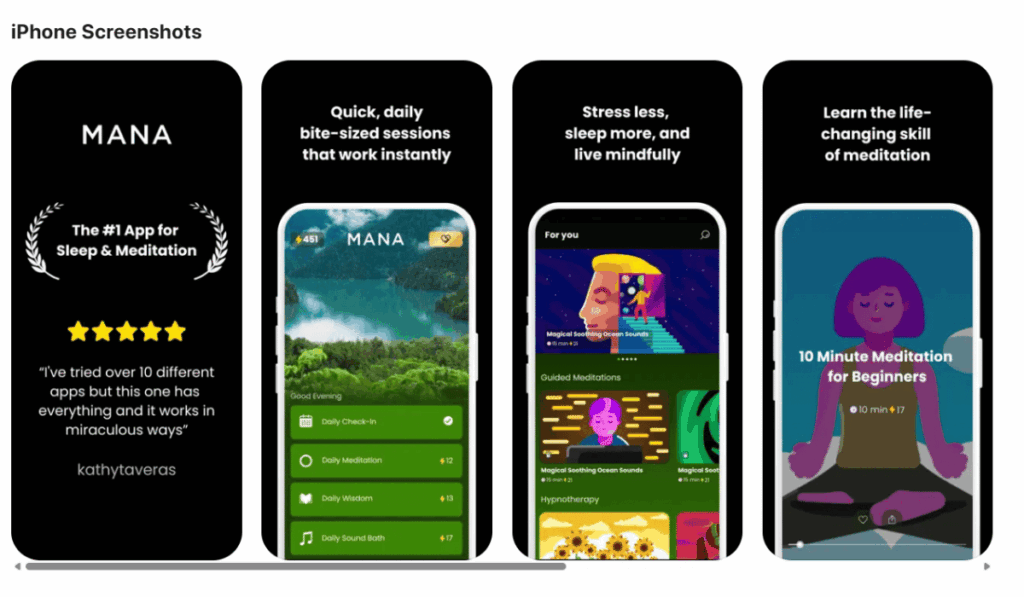
Best for deep relaxation and nervous system balance
Mana isn’t your typical sleep or meditation app — it’s built on the science of sound therapy to help reset your body and mind. The app uses carefully designed bilateral beats and therapeutic soundscapes that work with your nervous system to bring calm in just minutes. If you’ve ever struggled to fall asleep or felt stuck in a cycle of overthinking, Mana creates an environment where your thoughts finally quiet down.
What sets Mana apart is its focus on emotional healing as well as relaxation. While many apps stop at background noise, Mana’s sessions are crafted by experts to reduce stress, guide you into deeper sleep cycles, and even support trauma recovery. The design is sleek and intuitive, so you can start a session without fumbling through endless menus.
What makes Mana so special?
- Unique bilateral sound therapy not found in most apps
- Isochronic tones to help train the brain into calm, restorative states
- Solfeggio frequencies for emotional balance and deeper healing
- Expert-led sessions for sleep, stress, and emotional release
- A fresh, modern design that makes relaxation effortless
If you’re looking for something more impactful than generic “rain sounds,” Mana feels like a personal sound therapist in your pocket.
Website: mana.pro
2. Endel

Best for AI-generated relaxation sounds
Endel feels futuristic — like having your own personal AI composer creating music just for you. Unlike traditional playlists, Endel generates soundscapes in real time, adapting to factors such as the time of day, your activity level, and even your heart rate (if connected). This means no two sessions are ever the same, keeping your relaxation routine fresh and responsive.
What makes Endel especially appealing is its scientific foundation. The sound is built to encourage specific brainwave states — whether that’s relaxation, focus, or sleep. So if you’re powering through a deadline, the app will deliver stimulating but calming audio. If you’re winding down, it switches to soothing tones that gently quiet the mind.
Endel highlights:
- Adaptive soundscapes based on activity and environment
- Neuroscience-backed for real impact on focus and calm
- Fresh, non-repeating audio every time you listen
If you want something that feels both high-tech and deeply calming, Endel strikes the perfect balance.
Website: endel.io
3. MindSpa
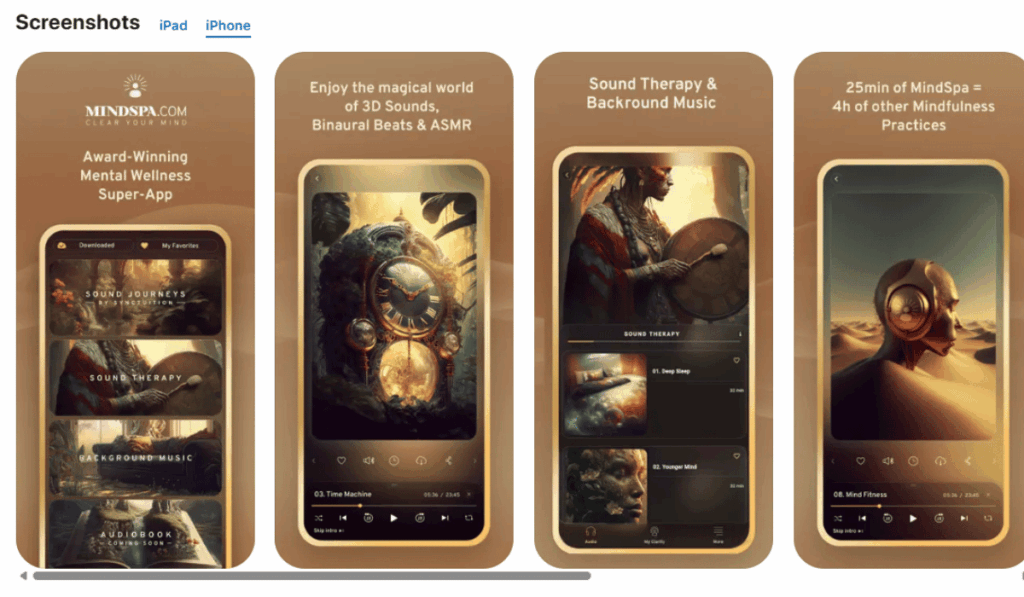
Best for guided mental wellness through sound
MindSpa blends sound therapy with structured wellness programs, making it more than just an audio app. It combines soothing soundscapes, gentle music, and voice guidance to walk you through sessions designed to improve sleep, reduce anxiety, and boost resilience. This makes it ideal if you’re someone who appreciates a little direction rather than simply hitting play on a sound loop.
The app also tailors its programs to fit into your lifestyle. You can choose shorter sessions for quick stress relief during the day or longer, more immersive experiences for deep relaxation at night. It’s like having a portable coach who knows when to nudge you toward calm and when to help you wind down fully.
Why choose MindSpa?
- Combines sound therapy with guided wellness coaching
- Sessions designed for stress relief, mood balance, and sleep
- Flexible programs that fit into a busy schedule
MindSpa is perfect if you want sound therapy plus a little extra structure in your self-care routine.
Website: mindspa.com
4. Noisli
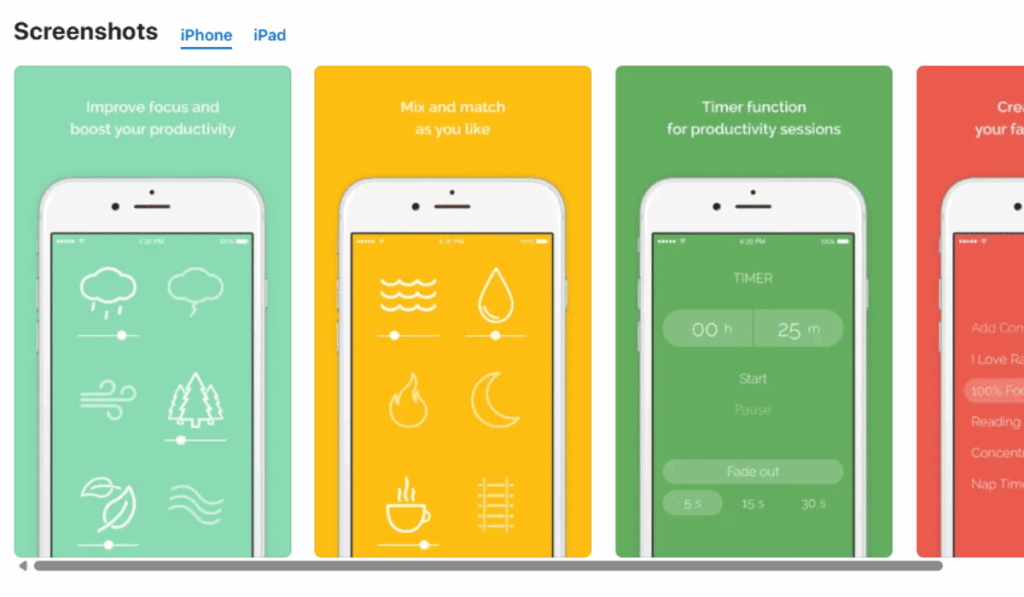
Best for focus and productivity
Sometimes the best way to relax isn’t total silence — it’s having just the right background noise to drown out distractions. That’s where Noisli shines. This simple yet powerful app lets you mix and match sounds like rain, wind, crackling fire, or even the soft hum of a coffee shop. The result is a personalized sound environment that helps you focus, unwind, or fall asleep.
Noisli is especially loved by students, remote workers, and creatives who need to block out the chaos around them. Instead of random YouTube “white noise” videos, you get full control over your sound mix, adjusting each layer until it feels perfect. It’s also designed with a clean, minimal interface, so you can build your ideal soundscape without distractions.
Why people love Noisli:
- Create your own custom sound mixes for work or rest
- Timer feature helps with productivity and deep focus
- Minimal, easy-to-use design
Whether you’re working in a noisy café or just need a calm backdrop to write, Noisli helps set the perfect mood. It’s like building your own pocket-sized sound sanctuary.
Website: noisli.com
5. Brain.fm
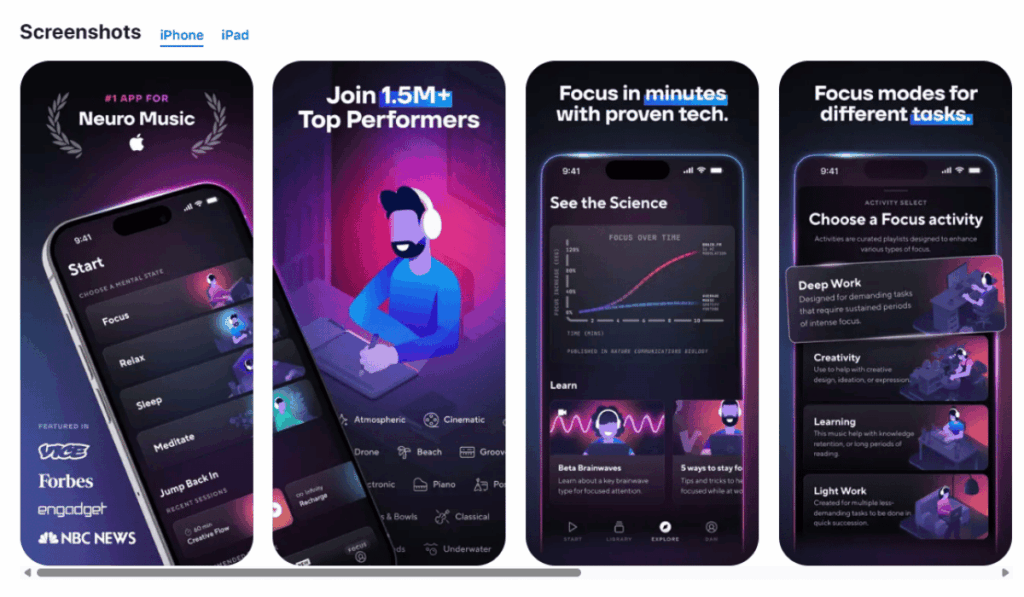
Best for focus with science-driven sound
Brain.fm takes sound therapy to another level by blending music with neuroscience. Instead of just soothing background noise, it uses AI-generated tracks designed to influence your brainwaves. This means the audio can actually help you concentrate better, relax faster, or fall asleep more easily.
What makes Brain.fm unique is that each sound session is created to push your brain into a desired state within minutes. For example, focus tracks encourage deep work by reducing mental wandering, while sleep tracks nudge your mind into slow, restorative rhythms. Users often say they feel results quickly — especially when compared to generic playlists or white noise.
Brain.fm highlights:
- Music scientifically engineered to improve focus, relaxation, or sleep
- AI-generated tracks that are always fresh and adaptive
- Backed by peer-reviewed research in neuroscience
If you’ve ever struggled to stay focused while working or found your mind racing at night, Brain.fm offers a surprisingly effective solution. It feels less like background noise and more like a brain-boosting tool you’ll actually notice working.
Website: brain.fm
FAQ 1: Does sound therapy actually work?
Yes, sound therapy does work, and there’s growing science to back it up. The idea is that sound isn’t just something we hear; it’s something our brain and body respond to. Certain frequencies and rhythms can actually shift your nervous system.
For example, slow, gentle sounds encourage the brain to move into calmer states, while more rhythmic beats can boost focus and alertness.
Studies have shown that listening to calming soundscapes — like rainfall, ocean waves, or binaural beats — can lower heart rate, reduce cortisol (the stress hormone), and improve sleep quality. Hospitals and therapists even use sound therapy in clinical settings to help patients with anxiety, chronic pain, and trauma recovery.
That said, the effects depend on how you use it. If you just put sounds on in the background without paying attention, the benefits may be subtle. But if you use sound therapy intentionally — for instance, lying down with headphones before sleep, or listening during meditation — you’re more likely to notice real changes in how relaxed and focused you feel.
So while it’s not a “magic cure,” sound therapy is a simple, natural, and effective tool that can absolutely support better mental and physical well-being.
FAQ 2: Who should avoid sound therapy?
Sound therapy is safe for most people, but a few should use caution.
Those with epilepsy or seizure disorders may want to avoid binaural beats or isochronic tones, as rhythmic sounds can occasionally trigger seizures. People with severe mental health conditions like psychosis or schizophrenia should also consult a professional before using it.
If you have tinnitus or sound sensitivity, some tones may be uncomfortable. And during pregnancy, it’s best to check with a doctor first.
Overall, if sound therapy causes discomfort, pause and seek medical advice.
FAQ 3: Can sound therapy help with tinnitus?
Yes, many people with tinnitus find relief using sound therapy. The idea is that soothing background sounds—like rainfall, ocean waves, or soft ambient tones—help mask the ringing or buzzing, making it less noticeable.
Some apps even include specific tinnitus-masking tracks designed for this purpose. While sound therapy won’t cure tinnitus, it can reduce the stress and anxiety that often come with it, improving sleep and concentration.
For best results, use headphones at a comfortable level and consult an audiologist to find the approach that works best for your unique situation.